DrivePro Auto DrivePro Auto

How to Choose Lighter Truck Wheels for Better Fuel Efficiency?

Time:2026-11-06 Author:Isabella
0%

A truck wheel may look like a small purchasing decision. Across a fleet, however, the weight difference between wheel options can add up. What is the impact of wheel weight on truck fuel efficiency? The answer depends on more than the wheel itself. Vehicle mass, route profile, speed, tire pressure, and load all affect fuel use. Lighter wheels also reduce rotating and unsprung mass, but the benefit should not be treated as a guaranteed fuel-saving percentage.

The U.S. Department of Energy has reported that a 10% reduction in vehicle weight can improve fuel economy by roughly 6–8%. That estimate is useful context, not a direct prediction for heavy trucks. The National Academies’ 2010 report, Technologies and Approaches to Reducing the Fuel Consumption of Medium- and Heavy-Duty Vehicles, emphasizes that savings vary with vehicle design and operating conditions. That distinction matters. A long-haul tractor on steady highways may respond differently from a truck making frequent stops or carrying variable loads. Fleet managers should compare complete wheel assemblies, confirm load ratings, and weigh the expected savings against purchase cost and service life. A scale ticket beats guesswork. One limitation is easy to miss: published vehicle-weight estimates do not isolate wheel weight, so applying them directly can overstate the result. Real-world fuel records are still needed. A careful comparison starts with the truck’s actual routes, axle positions, and maintenance history.
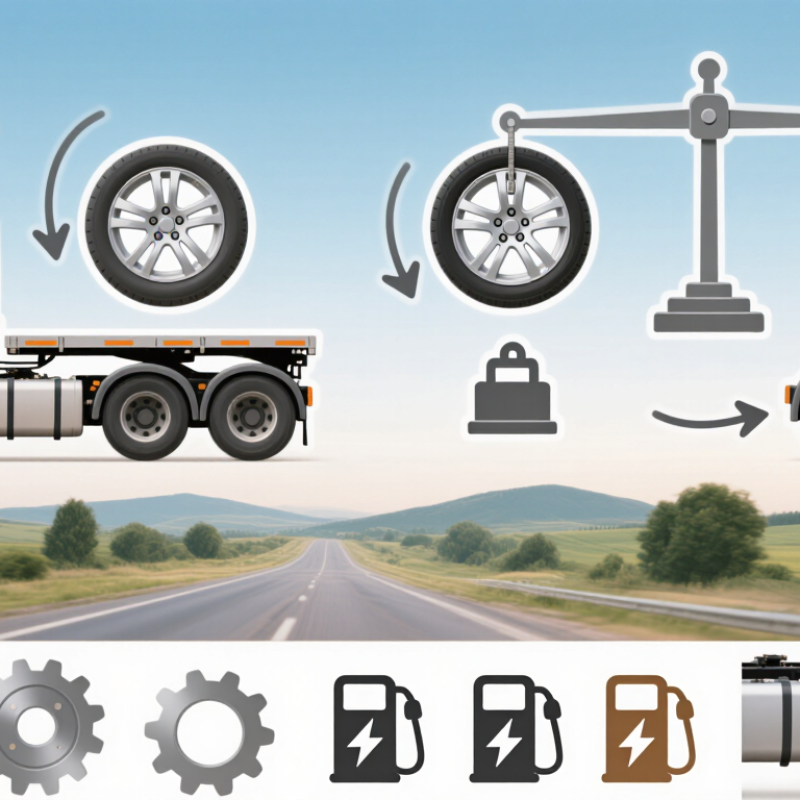
How to Choose Lighter Truck Wheels for Better Fuel Efficiency?

How Wheel Weight Affects Truck Fuel Efficiency

How Wheel Weight Affects Truck Fuel Efficiency

Lighter wheels reduce the mass a truck must accelerate, especially during repeated starts, stops, and climbs. That can lower fuel use, but the benefit depends on route, load, and driving style. At steady highway speed, wheel weight usually matters less than aerodynamics and rolling resistance. The U.S. Department of Energy notes that an extra 100 pounds can reduce a vehicle’s fuel economy by about 1%; treat this as a broad reference, not a guaranteed truck-specific result. A loaded truck behaves differently.

Wheel changes also affect unsprung mass—the weight supported by the tires rather than the suspension. Less of it may help the suspension follow rough pavement, though ride, durability, and load capacity still matter. Do not compare wheels by weight alone. Check the wheel’s rated capacity against the truck’s axle loads, then weigh the complete wheel-and-tire assembly. A lighter rim paired with a heavier tire may erase the savings. Real-world fuel logs are useful, but route and weather can muddy the comparison.

Tips: Record fuel use over the same route and similar loads before and after a change. Note tire pressure and weather, too. Small differences are easy to misread. Prioritize verified weight savings and adequate load ratings; the lightest option is not automatically the best.

How to Choose Lighter Truck Wheels for Better Fuel Efficiency? - How Wheel Weight Affects Truck Fuel Efficiency

The table below shows calculated examples of wheel-weight reduction, not measured fuel-economy results. Actual fuel consumption depends on the truck, tires, route, speed, load, and driving conditions.

Measure Scenario A Scenario B Scenario C
Wheel-weight reduction 2 kg (4.41 lb) per wheel 4 kg (8.82 lb) per wheel 6 kg (13.23 lb) per wheel
Wheel positions included 5, including a carried spare 5, including a carried spare 5, including a carried spare
Total vehicle mass reduction 10 kg (22.05 lb) 20 kg (44.09 lb) 30 kg (66.14 lb)
Share of an 8,000 kg (17,637 lb) operating truck mass 0.125% 0.250% 0.375%
Fuel-economy effect No reliable percentage can be calculated from weight alone No reliable percentage can be calculated from weight alone No reliable percentage can be calculated from weight alone
Best-use consideration Check wheel load rating and fitment before comparing weight Compare complete, compatible wheel options—not weight alone Confirm axle limits, tire compatibility, offset, and brake clearance

How to interpret the figures: Total reductions are calculated as per-wheel savings multiplied by five wheel positions. The 8,000 kg reference mass is an illustrative operating-mass assumption; the percentages are arithmetic comparisons, not predicted fuel savings. Lighter rotating wheels can reduce the energy needed to accelerate, but steady-speed fuel use also depends on factors such as aerodynamic drag, rolling resistance, and engine efficiency. Select wheels that meet the truck’s specified load and fitment requirements.

Which Wheel Materials and Designs Can Reduce Weight?

Aluminum wheels often weigh less than comparable steel wheels, which can reduce unsprung and rotating mass. The exact difference depends on wheel size, load rating, and construction. Forged aluminum wheels can use material efficiently, while cast designs may offer a lower-cost option. Neither process guarantees a lighter wheel; compare actual weights for the same specifications.

The shape matters, too. Open-spoke designs can remove material, but spokes and mounting areas still need enough strength for the truck’s rated load. A deep, thick design may weigh more than a simpler one. The trade-off is real. Check the wheel’s published load capacity, offset, and fitment before choosing; a lighter wheel that does not suit the axle is not a useful upgrade.

Look at the complete wheel-and-tire setup, not just the wheel. A heavier tire can erase some weight savings, and fuel results vary with payload, routes, and driving habits. Weighing each existing assembly gives a practical baseline. Measure before buying. One detail is easy to miss: lighter wheels do not automatically deliver noticeable fuel savings, especially on steady highway routes.

How to Check Load Ratings, Fitment, and Safety Standards

Choosing lighter truck wheels can reduce rotating mass, but weight savings matter only when the wheels remain suitable for the truck’s actual loads. Check the owner’s manual, door placard, and axle ratings before comparing options. Each wheel’s load rating should meet the vehicle maker’s requirements; do not assume the load is evenly divided among four wheels. Payload, tools, and tongue weight can change what each axle carries. Small details matter.

Confirm the bolt pattern, wheel diameter, width, offset, and center bore against the original specifications. A wheel may bolt on yet sit too close to the suspension or fender. Check brake-caliper clearance, too, especially if the design has a smaller inner barrel. If possible, test-fit one wheel before buying a full set. I have seen “almost right” fitments become costly.

Inspect the wheel for clear load-rating marks and documentation showing it meets applicable safety standards in your market. Ask the seller for records if markings are unclear. Avoid relying on appearance or claimed weight alone. Do not guess. After installation, use the specified lug-nut torque and recheck it as directed by the vehicle or wheel maker. Lighter wheels can help, but safe fitment is not a place to improvise.

How to Compare Fuel Savings with Cost and Durability

Lighter truck wheels may reduce rotational mass, but the fuel benefit can be modest and depends on the vehicle, tires, load, and route. Compare results on familiar work: similar cargo, roads, speeds, and weather. Track fuel used and distance before and after the change, then compare miles per gallon over several tanks. One short test can mislead. Wind, traffic, and a different payload can distort the numbers.

Put the measured fuel savings beside the full wheel cost, including installation and any changes to tires or sensors. Estimate annual savings from your own fuel records, not an optimistic sales figure, and calculate how long the upgrade takes to pay for itself. Small gains add up. Still, if the truck is replaced before break-even, the purchase may not make financial sense. That is easy to overlook.

Durability belongs in the same calculation. Check that each wheel’s load rating suits the truck and its heaviest regular payload. Ask about repairability, finish wear, and replacement availability; a cracked or badly damaged wheel can erase years of fuel savings. Lighter does not automatically mean fragile, but it is not proof of strength either. Keep tire pressure and alignment consistent during testing, since either can affect fuel use. Even a careful comparison is imperfect, yet recording the conditions makes the decision more reliable.

How to Choose and Maintain Lightweight Truck Wheels

Choosing lightweight truck wheels begins with the truck’s actual axle loads, tire size, and route. Compare each wheel’s weight and load rating, then confirm its offset, bolt pattern, and brake clearance match the vehicle specifications. A lighter wheel is not a useful upgrade if it reduces required load capacity. The U.S. Department of Energy gives a general estimate of roughly 1% better fuel economy per 100 pounds removed, but that figure is not truck-specific. Treat it as context, not a promised saving. Track fuel use over comparable routes before and after installation.

Look for documented material and load-rating data, not weight claims alone. Forged or purpose-designed alloy wheels may weigh less than steel alternatives, but construction and duty cycle matter. Small gains add up. Still, wheel weight is only one part of a loaded truck’s fuel use; speed, tires, terrain, and payload can outweigh the difference. The North American Council for Freight Efficiency’s reports on truck efficiency likewise emphasize evaluating technologies in real fleet operations.

Keep lightweight wheels in serviceable condition. At each tire change, inspect the inner and outer rims for cracks, bends, corrosion, and damaged lug seats. Clean mating surfaces so the wheel sits flat, and tighten fasteners to the vehicle maker’s specified torque with a calibrated tool. Recheck them when the service procedure requires it. Maintain tire pressure at the vehicle’s recommended level and record irregular wear; vibration or repeated pressure loss deserves prompt inspection. A light wheel still needs careful upkeep.

How Lighter Truck Wheels May Improve Fuel Efficiency

Illustrative estimate for an 8,000 kg truck with eight wheels. The calculation applies the U.S. Department of Energy’s estimate that a 10% reduction in vehicle weight can improve fuel economy by 6–8%. Actual results vary with vehicle, route, tires, and driving conditions; wheel-related rotational effects are not included.

Source for the weight-to-fuel-economy relationship: U.S. Department of Energy, “Reducing Vehicle Weight.” Values shown are estimates, not guaranteed savings.

FAQS

How can lighter wheels affect a truck’s fuel efficiency?

They reduce the mass the truck must accelerate, especially during frequent starts, stops, and climbs. The savings vary.

Do lighter wheels save much fuel on highways?

Usually less than during stop-and-go driving. At steady speeds, aerodynamics and rolling resistance often matter more. Not always.

Is there a useful estimate for weight-related fuel savings?

A general estimate suggests removing 100 pounds may improve fuel economy by about 1%. It is not a truck-specific promise.

Should I compare wheel weight alone?

No. Compare the complete wheel-and-tire assembly. A lighter rim with a heavier tire may erase the weight savings.

What should I check before choosing lightweight wheels?

Check axle loads, wheel load ratings, tire size, offset, bolt pattern, and brake clearance. A wheel must carry the truck’s required load.

How can I tell whether a wheel change helped?

Compare fuel logs on similar routes with similar loads. Record tire pressure and weather, too. Small gains add up.

What should I inspect during tire changes?

Look inside and outside each rim for cracks, bends, corrosion, and damaged lug seats. Clean the mating surfaces so the wheel sits flat.

What maintenance details are easy to overlook?

Use the specified fastener torque and a calibrated tool. Follow the required recheck procedure, and watch for vibration or repeated pressure loss. I may be giving small gains too much credit; measurement matters.

Conclusion

Choosing lighter truck wheels can improve fuel efficiency by reducing rotational mass, which may help a truck use less energy when accelerating and driving in stop-and-go conditions. What is the impact of wheel weight on truck fuel efficiency? The effect depends on the vehicle, route, driving habits, and how much weight is removed, so lighter wheels should be viewed as one possible efficiency improvement rather than a guaranteed source of major savings. Material and design choices can reduce weight, but strength and durability remain essential.

Before choosing wheels, confirm that their load ratings, dimensions, offset, and mounting specifications suit the truck, and check that they meet applicable safety standards. Compare the expected fuel savings with the purchase price, service life, and maintenance needs. Inspect wheels regularly for damage, keep tires properly inflated, and follow recommended care practices. A well-matched lightweight wheel can balance efficiency, safety, and long-term value.

Isabella

Isabella

Isabella is a dedicated marketing professional with a sharp focus on driving brand growth and engagement through strategic content creation. With an extensive background in digital marketing, she combines her passion for storytelling with her keen understanding of industry trends to deliver......