DrivePro Auto
Oxidized aluminum wheels can look dull, chalky, or cloudy, especially around lug holes and spoke edges. Road salt, brake dust, moisture, and neglected cleaners often create this uneven surface. The right cleaning method depends on whether the wheel has a clear coat, painted finish, or exposed aluminum. Misidentifying it can cause permanent damage.
So, how should a careful owner begin? Ask: “How to clean oxidized aluminum wheels without damaging the finish?” The safest answer starts with inspection, not aggressive polishing. Check the manufacturer’s care instructions, then test a small hidden area. Use cool water, a pH-neutral wheel cleaner, microfiber towels, and soft detailing brushes. A gentle rinse should remove loose grit before any wiping begins. Never scrub dry oxidation.
This guide presents ten practical methods, including pre-rinsing, mild soap washing, soft-brush cleaning, clay treatment, and suitable metal polishing. Each method explains when it works and when it should be avoided. Bare aluminum may tolerate a dedicated polish, while coated wheels usually need less abrasion. Acidic cleaners, strong alkaline products, steel wool, and rough pads can leave stains or scratches.
Small details matter. Clean one wheel at a time. Keep the surface cool. Rinse cleaner completely. Dry the lug recesses with compressed air or a clean towel. It may be tempting to chase a mirror finish, but that goal can create new marks. No method is universally safe. A cautious test remains more reliable than a confident guess.
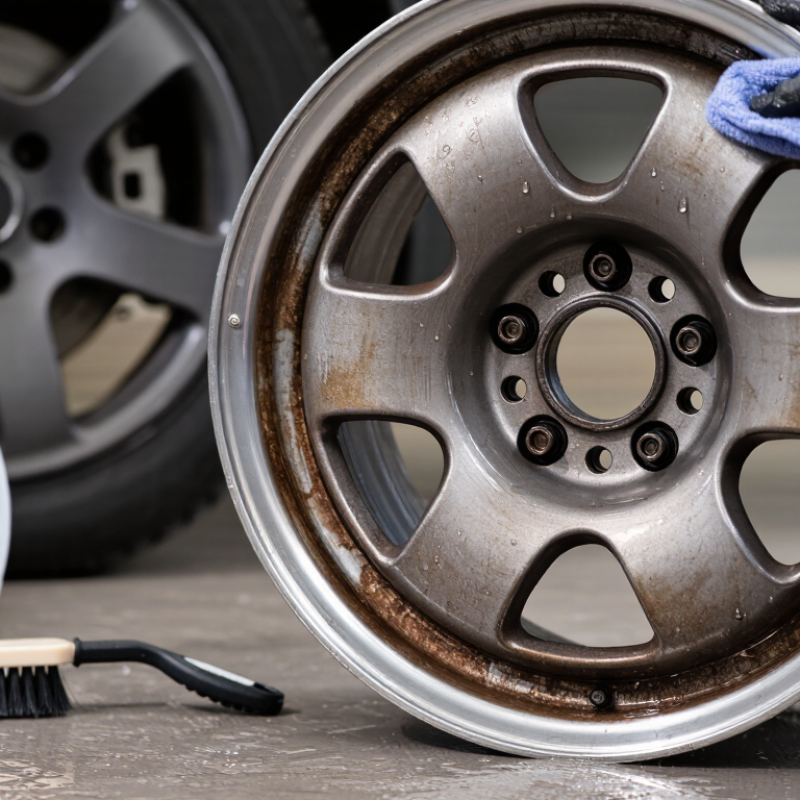
Oxidation assessment should come before polishing an aluminum wheel. Let the wheel cool completely, then rinse away loose grit with clean water. White, cloudy patches usually indicate aluminum oxide or coating failure. Dark stains may also contain brake dust, road salt, or embedded iron particles. I recommend testing a hidden area with a pH strip and a small amount of diluted cleaner. Keep the first wash between pH 6 and 8. This range is mild enough for cautious inspection.
Use a soft detailing brush, light pressure, and plenty of water. Do not scrub a dry surface. A neutral wash may reveal damage that looked like simple dirt. The Aluminum Association explains that aluminum naturally forms a thin oxide layer, which can slow further corrosion. However, scratches, salt, and trapped moisture can weaken that protection. A 2013 NACE IMPACT study estimated global corrosion costs at 2.5 trillion dollars annually, or about 3.4% of global economic output. That figure covers many industries, not wheels, but it shows why early assessment matters. I still rush this step sometimes. That is a mistake.
After rinsing, dry the wheel with a clean microfiber towel and inspect it under angled light. If the finish feels rough or shows lifting clear coat, stop using stronger chemicals. Neutral cleaning cannot repair coating failure. It only helps identify the real problem.
Oxidized aluminum wheels need patience, not aggressive scrubbing. I clean them below 40°C, preferably in shade, because hot metal dries cleaner too quickly. I wear chemical-resistant gloves, eye protection, and covered shoes. A cool surface gives better control.
I begin by rinsing away loose grit with clean water. Then I use a pH-neutral wheel cleaner, diluted as directed, and let it sit briefly. Never allow it to dry. A soft microfiber cloth handles broad areas, while nylon or other nonmetallic brushes reach around spokes and bolt holes. Metal brushes can leave scratches and expose fresh aluminum. A soft toothbrush works surprisingly well.
Small sections are safer. Rinse each area thoroughly before moving on. For stubborn oxidation, I repeat the gentle wash instead of increasing pressure. A plastic scraper can lift trapped residue, but only with light contact. I have learned this the hard way; one rushed pass made a dull patch more visible. After washing, I dry the wheel with a clean towel and inspect it under angled light. If white oxidation remains, polishing may require professional assessment, especially when the surface has peeling coating or deep pitting. Avoid mixing cleaners, and test any method on a hidden section. Safety data should guide chemical use, not guesswork.
For light oxidation, start with lukewarm water and pH-neutral soap. Oxidation often appears as chalky white patches, not ordinary brake dust. The U.S. Department of Energy reports that reducing vehicle weight by 10% can improve fuel economy by 6–8%. Careful wheel maintenance helps preserve lightweight aluminum components.
Rinse away grit first. Then wash one cool wheel with a soft microfiber mitt. Use short strokes. Dry the spokes and lug recesses with a separate towel. Never let soapy water evaporate.
If haze remains, use a well-lubricated clay bar on a small section. Clay can remove bonded particles, but it cannot rebuild missing finish. Keep the surface wet, fold the clay frequently, and stop if it drags.
ASTM G1 recommends controlled cleaning and inspection when evaluating corrosion changes. Compare the treated area under the same daylight. I once rubbed too long. The wheel looked brighter, but fine lines appeared near the rim edge.
A test spot prevents that mistake. If oxidation returns quickly, the clear coat may be damaged. More clay is not always better. A qualified wheel-refinishing technician should inspect it.
Use a cleaner approved for aluminum wheels, not a general household degreaser. Read the label for coated, polished, or bare metal surfaces.
Rinse loose grit first. Work in shade on a cool wheel. Apply the solution with a soft brush, then rinse before it dries.
Acidic products can stain exposed aluminum quickly.
Baking soda offers a gentler option for light oxidation. Mix it with water until it forms a thin paste. Spread it lightly, wait two minutes, and wipe with microfiber.
Do not scrub hard. That can leave dull trails.
Steam can loosen oily residue from seams, lug pockets, and tight spoke areas.
Keep the nozzle moving and several inches away. Excessive heat may soften protective coatings or force moisture behind seals.
Dry the wheel immediately with a clean towel.
I would test steam on a hidden section first, because surface finishes do not always react predictably.
For stubborn white spots, use targeted treatment instead of cleaning the entire wheel repeatedly.
Dab the approved cleaner onto the mark with a cotton swab or small microfiber corner. Let it dwell briefly, then rinse thoroughly. Repeat once if needed.
Avoid metal brushes, abrasive pads, and undiluted chemicals.
Inspect the finish under bright light afterward. Sometimes oxidation has already damaged the surface, and cleaning cannot restore a factory appearance.
Photographing the wheel before treatment can reveal whether the spot is actually improving.
After removing oxidation, polish the aluminum wheel with a non-abrasive metal polish and a clean microfiber cloth. Work in small sections, using light pressure around spokes and lug holes. Heavy polishing can thin an existing clear coat or leave uneven shine. I have found that patience matters more than force. Stop when the surface feels smooth, not when every stain disappears.
Remove all polishing residue with a water-based cleaner and dry the wheel completely. Apply a compatible wheel sealant in a thin, even layer. Avoid trapped moisture near valve stems, seams, and bolt seats. Follow the product’s curing time, even if the surface feels dry sooner. Rushing this step can create hazy patches. My first attempt at a heavily oxidized wheel looked acceptable indoors, but sunlight exposed dull rings I had missed.
Check coating adhesion with ASTM D3359 only after the coating has fully cured. Make a small crosshatch pattern in an inconspicuous area, apply standardized pressure-sensitive tape, then remove it at the specified angle. Compare the removed coating with the ASTM rating chart. Perform this test carefully; it damages the tested spot. If flaking appears, stop sealing and investigate surface preparation or coating compatibility. ASTM D3359 is useful, but it does not replace visual inspection, thickness checks, or professional judgment. Do not test near a critical mounting surface.
Let the wheel cool completely. Rinse away loose grit with clean water, then inspect white patches and dark stains.
It often indicates aluminum oxide or failing coating. The surface may look chalky rather than simply dusty.
Use a mild cleaner between pH 6 and 8. Test a hidden area before washing the visible surface.
Use lukewarm water, pH-neutral soap, and a soft microfiber mitt. Keep the wheel wet and use short strokes.
No. Dry scrubbing can create fine lines and spread grit across the finish. Use plenty of water.
Clay can remove bonded particles, but it cannot rebuild missing coating. Keep the surface wet and use light pressure.
Dry it with a clean microfiber towel and inspect it under angled light. Roughness may signal deeper coating damage.
Stop if the clear coat lifts, scratches appear, or oxidation returns quickly. More cleaning is not always better.
A test spot shows how the finish reacts. I once rubbed too long, and fine lines appeared near the rim edge.
Cleaning oxidized aluminum wheels safely begins with assessing the oxidation and existing finish. Start with a gentle wash using a pH 6–8 neutral solution, cool water, microfiber towels, and nonmetallic brushes. Work in a shaded area below 40°C, wear suitable protective equipment, and avoid aggressive scrubbing that could create scratches or remove the protective coating. For light oxidation, soap, microfiber cleaning, and a clay treatment may be sufficient.
For heavier or localized oxidation, use an aluminum-safe cleaner, baking soda paste, controlled steam, or careful spot treatment after testing a hidden area. Light polishing can restore clarity, but it should be followed by a suitable sealant to slow future oxidation. The key question is: How to clean oxidized aluminum wheels without damaging the finish? The answer is to use the mildest effective method, rinse thoroughly, dry completely, and inspect the coating afterward. A simple adhesion check based on ASTM D3359 principles can help identify loose or failing finish before further treatment.
